Greater Access to the Lake for Everyone: For the Fair Use of Our Natural Spaces
Austria’s lakes are among the country’s most important natural and recreational areas. At the same time, access to them is restricted in many places: While the water itself is open to the public, large portions of the shoreline are privately owned. In practice, this means that although nature is present, it is not equally accessible everywhere.
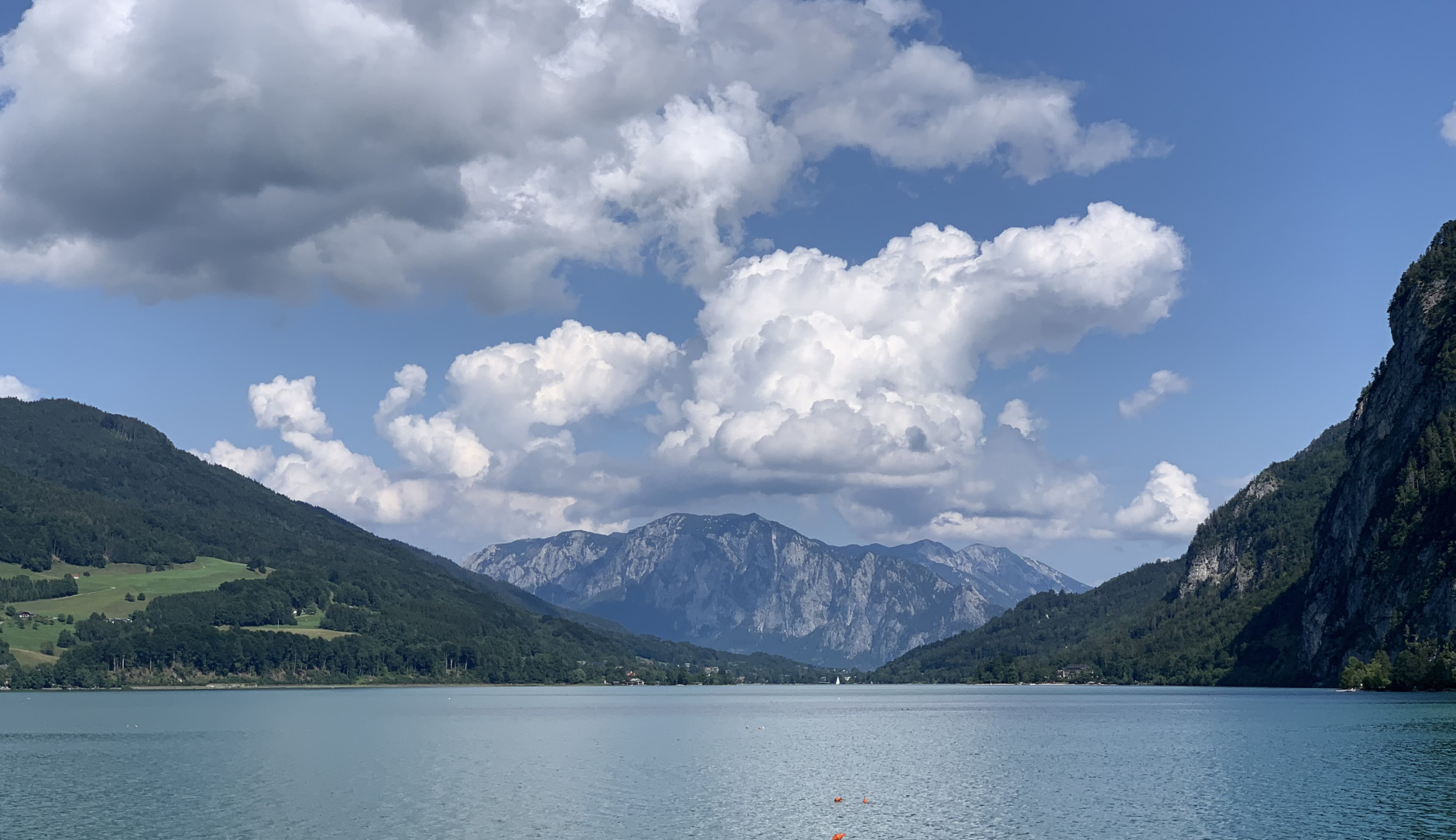
Austria’s lakes are among the country’s most important natural and recreational areas. At the same time, access to them is restricted in many places: While the water itself is open to the public, large portions of the shoreline are privately owned. In practice, this means that although nature is present, it is not equally accessible everywhere.
Volt advocates for the further development of existing regulations. The goal is to systematically improve public access to lakes - in harmony with the protection of property rights, nature conservation, and a cooperative, legally sound implementation.
Our Privately Owned Lakes
Lakes fulfill a central ecological, social, and health-related function. They are places for recreation, physical activity, and quality of life.
The problem lies less in the legal status of the lakes than in their actual accessibility: While the water is public, the shores are often privately owned, and public access points are unevenly distributed across regions or difficult to reach.
Rico Winter, co-president of Volt Austria: “In regions such as Salzburg and Upper Austria in particular, it is very clear that while lakes are part of our public natural landscape, actual access depends heavily on which sections of the shoreline have remained open to the public, because a large portion of the lakeshores is privately owned. This is particularly evident at Mondsee, whose current ownership structure dates back to the Napoleonic reorganization and remains in family hands to this day.”
Responsibilities in Austria
The regulation of lake access is governed by the federal system and is distributed across several levels:
Federal states such as Salzburg and Upper Austria are responsible for regional planning, land-use zoning, and nature conservation
Municipalities implement specific access points and infrastructure
The federal government regulates water law and property rights, but does not directly plan access
Thus, the primary discretion clearly lies with the states and municipalities.
European countries and their lake access points
A look at Europe reveals different models for managing access to nature.
In Scandinavia, access to nature is deeply rooted in the culture and is facilitated by clear rules that promote broad, responsible use. In Switzerland, the focus is on the targeted planning and long-term preservation of public waterfront trails as part of public infrastructure.
In contrast, in Central Europe, public water law and heavily privatized waterfront areas often diverge.
Karoline Adam, co-president of Volt Austria, adds: “When we talk about nature and local recreational areas being a common good, it’s not enough for the lake to belong to everyone only in theory. What matters is that people can actually reach and use it.”
Our Principles
Volt pursues a balanced approach that takes into account the public interest, the protection of property rights, and nature conservation.
Lakes are part of our shared natural and recreational space. Access to them should not depend on income or the random nature of historical ownership structures. At the same time, private property remains a fundamental right that must be respected.
All measures must be implemented in a cooperative, legally sound, and environmentally sustainable manner.
Volt proposes a gradual expansion of public access to lakes:
Larger lakes should have sufficient publicly secured access points
Expansion should preferably take place through partnerships, such as through purchase, exchange, or voluntary agreements with property owners
Existing public access points should not be lost without replacement
States and municipalities should make targeted investments in swimming areas, accessible entry points, restroom facilities, and infrastructure
New access points must be planned in an environmentally sustainable manner, and sensitive shoreline areas must be protected
If voluntary measures prove insufficient, Volt supports the consideration of binding minimum standards for public lake access at the state level.
In special cases (e.g., where there is only a single swimming lake in a wider area, but it is completely surrounded by private property), all legal means should be examined and exhausted; however, voluntary solutions should always be given priority.
Lakes are part of our public natural heritage. Yet in many places, there is a gap between legal entitlement and the reality on the ground.
Volt advocates for policies that do not merely manage this contradiction but resolve it pragmatically - through cooperation, planning, and a fair balance between the public interest and property rights.